Scale your data team’s output by up to 100x. We'd love to prove it.

Challenge Maia at Snowflake Summit

Reverse ETL: A Complete Guide to Process, Benefits, and Use Cases

Reverse ETL: Data where business users need it most

ETL + Reverse ETL: Completing the data activation loop.

ETL + Reverse ETL: Completing the data activation loop.
ETL loads and transforms data for analysis, while Reverse ETL sends enriched insights back into operational tools for real-time business impact.

Modern organizations are unlocking the value in their data to gain a competitive advantage. But when data is scattered around among different systems, it’s difficult to gain insight into operations or use data for meaningful reporting. According to the 2020 Matillion/IDG Marketpulse survey, data professionals spend 45 percent of their time preparing data for analytics.  

TL;DR:

Reverse ETL (also called data activation, sync back, unload) refers to the process of taking cleaned, transformed data from a central data warehouse and pushing it into operational systems used by business teams (CRMs, marketing tools, support platforms, etc.). The goal: make data actionable where business users work.

According to the 2025 Data Integration & AI-Readiness Report, many organizations see their data teams spending more than half their time on repetitive tasks. Reverse ETL helps reduce that overhead by automating data delivery.

image description

Key takeaways:

  • Reverse ETL brings actionable data to operational systems used by business teams.
  • It makes data accessible to frontline workers, such as sales, marketing, and support teams.
  • Reverse ETL is also known as ‘Sync Back,’ ‘Data Activation’ or ‘Unload,’ terms that reflect the process of pushing data out of the warehouse and into operational systems.
  • The process involves extracting transformed data from a cloud data warehouse and loading it into tools like CRMs, marketing platforms, and support systems.
  • Reverse ETL supports decision-making and enhances customer experience by automating the flow of enriched data.
  • Reverse ETL for AI brings AI-enhanced data - such as sentiment analysis, transcript summaries and RAG queries - into operations, to streamline processes and ramp up productivity

Guide to Reverse ETL - Process, Examples, & More

In the modern, data-driven world, businesses, organizations and enterprises are constantly looking for ways to unlock the full potential of their data. Yet, with data scattered across multiple systems, gaining insights, streamlining operations, or personalizing customer experiences is difficult.

While ETL (Extract, Transform, Load) and cloud-native ELT (Extract, Load, Transform) have enabled businesses to consolidate data into centralized cloud platforms like Snowflake, Amazon Redshift, Google BigQuery, and Azure Synapse, these approaches primarily serve data teams and analysts. 

But what about frontline business users, sales reps, marketers, and customer service teams who need timely, actionable data in the tools they already use?

According to our 2025 Data Integration and AI-Readiness Report, a third of businesses reported plans to improve processes by automating workflows over the next 12 months. Meanwhile, 64% of organizations stated that their data teams spent more than half of their time working on repetitive or manual tasks, time that could be better spent driving business insights and innovation.

This is where Reverse ETL comes in. Reverse ETL takes transformed, enriched data from cloud data warehouses and pushes it back into operational systems such as Salesforce, HubSpot, Zendesk, and other SaaS applications. Automating data flows into business tools, eliminates manual data pulls, reduces dependence on data teams, and enables operational analytics. 

These inefficiencies slow down decision-making and prevent organizations from fully leveraging their data investments. This makes data actionable where and when it matters most, helping teams respond faster to customer needs, optimize marketing efforts, and drive revenue growth. Ian Funnell Data Engineering Advocate Lead| Matillion

What is reverse ETL?

Traditional ETL: The beginning

For decades, businesses have used ETL (Extract, Transform, Load) to consolidate data from various sources into a structured data warehouse for reporting and analytics. The process involved extracting raw data, transforming it into a standardized format, and then loading it into an on-premises data warehouse.

As cloud computing gained traction, ELT emerged, leveraging cloud-based platforms like SnowflakeAmazon RedshiftGoogle BigQuery, and Azure Synapse to perform transformations within the warehouse itself.

While ELT made data consolidation faster and more scalable, it didn’t address a fundamental challenge: getting this enriched data back into the hands of business users in a way that was easily accessible and actionable. 

Essentially, analysts were able to generate reports, but sales reps, marketers, and customer support teams often lacked actionable insights into the applications they used daily.

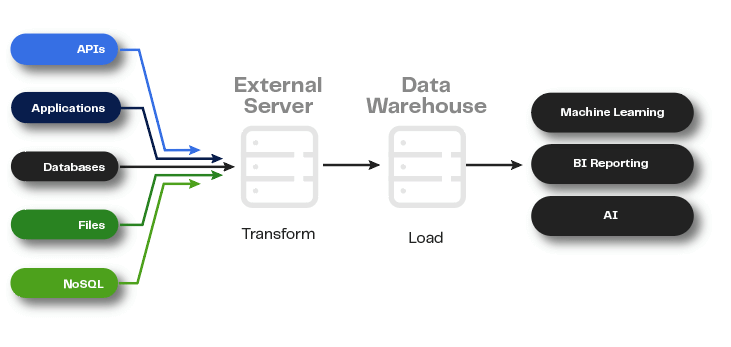
Reverse ETL vs ETL: Centralize vs Operationalize.

Reverse ETL vs ETL: Centralize vs Operationalize.
ETL centralizes raw data in the warehouse for analytics; Reverse ETL operationalizes it by syncing insights back into CRM, marketing, and finance tools.

From ETL to ELT

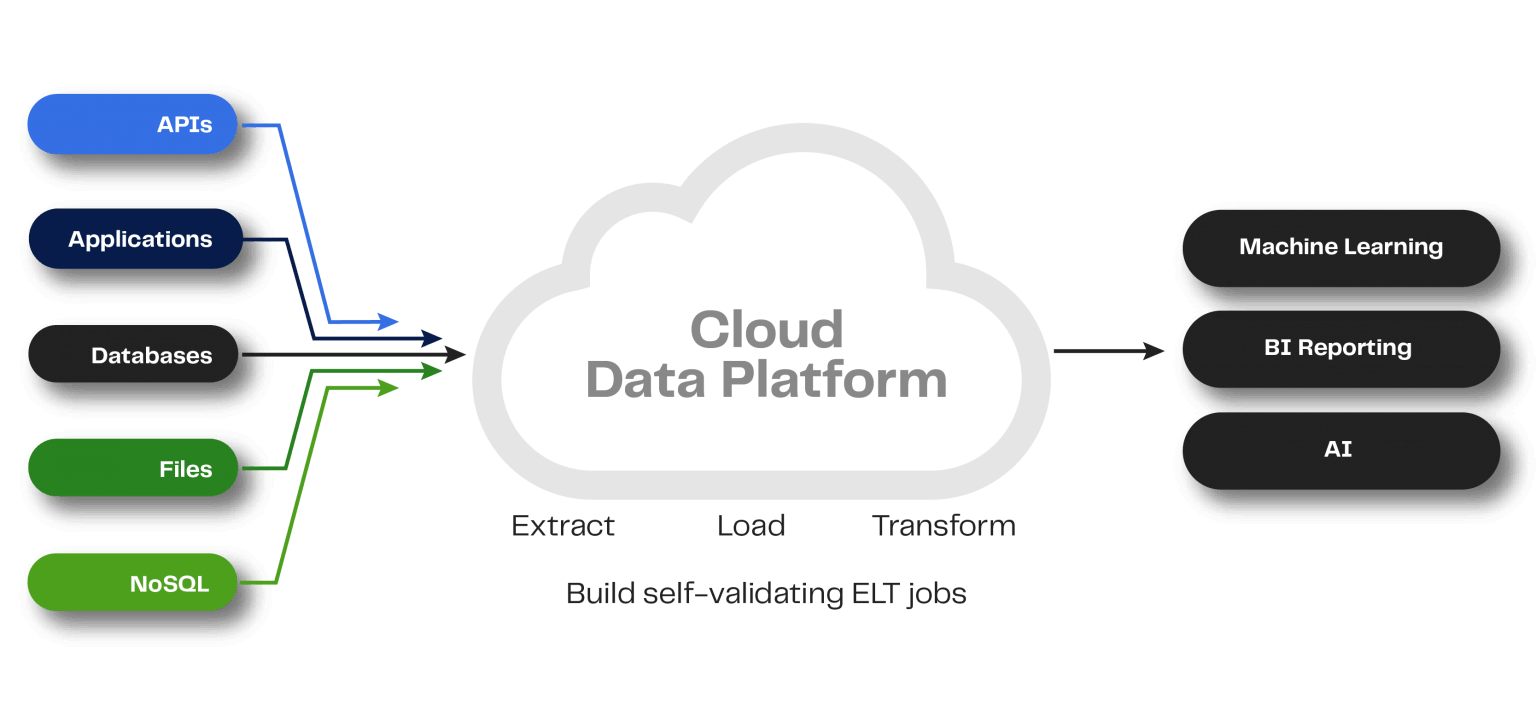
ELT has evolved the ETL process into something faster, simpler, and more scalable.  Cloud-native ELT is a more effective way to consolidate data by extracting it from source systems, loading it into the cloud data platforms, and then using the power of the cloud data platforms to do data transformation there. With the transformation happening INSIDE the cloud data warehouse, users can take full advantage of the power and performance of the cloud.

But cloud ELT really requires a cloud-native ELT solution. The most likely destination for this transformed data is cloud-native business intelligence tools, where analysts and engineers can do analytics and reporting, and increasingly into machine learning and artificial intelligence models, where data scientists can extract deeper, often predictive insights.
 

Reverse ETL: From anywhere to everywhere

Now we’re hearing a lot of buzz about something called reverse ETL. Essentially, it’s another kind of data pipeline that extends the value of the data in the cloud data platform to more people in the organization. With reverse ETL, transformed data goes from the cloud data warehouse back out to operational systems: applications like Salesforce, databases, cloud storage, and more systems that are used by marketing, sales, and support.

During reverse ETL, the information extracted from your central data warehouse or data lake has been transformed to adhere to the data model of the target systems. Reverse ETL solutions can also copy unstructured data from a data lake out to the target systems.
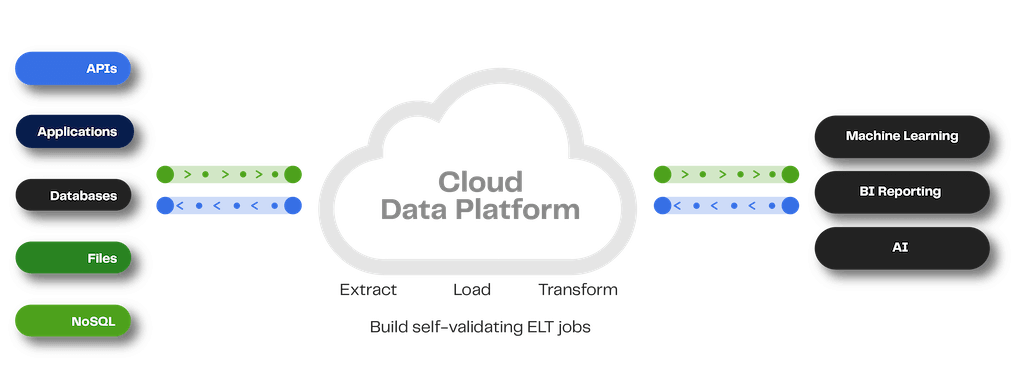
Reverse ETL in action: Operationalizing enriched customer data.

Reverse ETL in action: Operationalizing enriched customer data.
The data warehouse becomes the source of truth that powers CRM, marketing, support, and finance systems.

Reverse ETL is intended to enable “operational analytics.” It takes all the useful data from the cloud data platform and syncs it back to operations systems so that business teams can access and act on the same data that’s being used by the analysts, in real time. Operational analytics supports better day to day operations by giving business users the data they need in the applications they use every day.

Actually, reverse ETL is nothing new: for years, data engineers have been transforming data and moving it back into databases and applications. Commonly this was done from Operational Data Stores or (ODS). Today, in Cloud Data Platforms, the ODS and enterprise data warehouses are combined and allow the data engineers more flexibility.  What’s changed is the level of labor required. Until recently, reverse ETL required a lot of coding, time, and effort. But in the cloud, with a cloud-native data integration tool, what used to take days or weeks now takes a fraction of the time. 

Reverse ETL: Making Data Actionable

Reverse ETL flips the traditional ETL model by syncing cleaned, transformed data from a centralized data warehouse back into the operational tools employees use every day. Instead of being limited to dashboards and BI tools, data becomes directly accessible in CRM platforms, marketing automation systems, and customer support applications.

For example:

  • A sales team using Salesforce can receive updated lead scores powered by machine learning models running on warehouse data.
  • A marketing team can sync customer segmentation insights into tools like Marketo to drive hyper-personalized campaigns.
  • A support team using Zendesk can access a customer’s full history, including purchase details and previous interactions, to provide better service.
The biggest challenge isn’t collecting data, it’s making it usable. Reverse ETL bridges the gap between centralized data and business execution, enabling teams to act on insights faster. Ian Funnell Data Engineering Advocate Lead| Matillion

Reverse ETL for AI

Activating data that has been enriched by AI offers tremendous potential business benefits, primarily enhancing decision-making processes. By leveraging AI to enrich raw data with insights - such as predictive analytics and natural language processing results - organizations can transform unstructured data into actionable intelligence. This leads to faster and more informed decisions and operations, even allowing businesses to anticipate market trends, customer preferences, and potential challenges.

For example, AI-enriched data can provide a detailed understanding of consumer behavior, enabling businesses to tailor their marketing strategies more precisely and increase customer satisfaction and retention.

Whether it's by optimizing current processes or uncovering new opportunities, AI-enriched data activation fundamentally transforms raw data into a catalyst for continuous improvement and sustained competitive advantage.

Reverse ETL for AI combines and multiplies two powerful forces: cutting-edge AI analysis and strategic data mobility. Ian Funnell Data Engineering Advocate Lead| Matillion

How Reverse ETL Works: Step-by-step

Now that we’ve discussed the concept of Reverse ETL and compared it to traditional ETL, let's dive into the mechanics of how Reverse ETL works in practice. The process involves several key steps, from extraction to activation, allowing businesses to make data-driven decisions.

  1. Model / Define datasets
    • Within the warehouse or semantic layer, analysts & engineers build models or SQL queries that express the business logic (e.g. “customer health score,” “propensity to upgrade,” “churn risk”).
    • This is the “source of truth” logic.
  2. Extract / Query
    • Run the queries against the warehouse to fetch the needed datasets.
    • This may run on schedule (batch) or streaming / near-real time.
  3. Transform / Map
    • Adjust the data into the schema expected by destination systems (renaming, flattening, casting, filtering).
    • Map fields from warehouse models to CRM or API fields (e.g. customer_id → AccountId, health_score → Lead_Score).
  4. Load / Sync
    • Use APIs, webhooks, or connectors to push the data into target systems (e.g. Salesforce, HubSpot, Zendesk).
    • Handle rate limits, batching, incremental updates vs full loads, conflict resolution.
  5. Activate / Use
    • Now business teams can act on this data inside their tools: personalized campaigns, lead prioritization, service workflows, etc.
  6. Monitor, Log & Maintain
    • Track sync health, error rates, latency, schema changes, data freshness.
    • Alert on failures, enable retry logic, maintain audit trails.
    • Version control your mappings / pipelines.
    • Regularly review and optimize.

Many reverse ETL platforms already include monitoring, retry logic, observability, and error handling.

Core Components of Reverse ETL

In addition to these five steps, there are four main components to understand in the Reverse ETL process:

  • Source - The origin of your data, which could come from various locations, such as cloud applications, mobile SDKs, or internal systems.
  • Models - These are SQL queries that define which data sets need to be synchronized with downstream tools, and how the data should be structured or aggregated.
  • Destinations - These are the tools and applications where you want to deliver data from the data warehouse. Examples include CRMs, marketing automation platforms and customer support systems.
  • Mapping - This is the step where the data is mapped from the data warehouse to specific fields in the target destination, ensuring that the right data gets delivered to the right places.

By following these key steps, Reverse ETL enables operational access to transformed data, helping business teams, from sales to support, make better decisions based on the latest insights.

It essentially bridges the gap between technical teams and frontline users, making data actionable and driving smarter decision-making across the organization. Ian Funnell Data Engineering Advocate Lead| Matillion

Reverse ETL vs ETL: Syncing data back to operational systems

Traditional ETL and cloud-native ELT have been instrumental in consolidating enterprise data, providing a single source of truth for analytics and reporting. By centralizing data in cloud data platforms like Snowflake, Amazon Redshift, and Google BigQuery, businesses enable analysts and engineers to uncover insights and power business intelligence (BI) dashboards. However, the impact of these insights is often limited to technical users.

Reverse ETL extends this process by ensuring that the enriched, transformed data doesn’t just stay in the warehouse, it flows back into the operational systems where frontline teams can use it. Instead of business users having to rely on IT or BI teams to extract relevant insights, Reverse ETL automates this step, syncing key data directly into CRMs, marketing automation platforms, customer support tools, and other day-to-day applications.

While ETL/ELT prepares data for analysis, Reverse ETL makes that data operational, closing the loop between analytics and execution. It ensures that data-driven insights aren’t just observed, they’re acted upon at the moment they matter most.

Reverse ETL is a game-changer because it removes the disconnect between data and action. Instead of waiting on reports, teams can access insights right where they work, whether that’s in Salesforce, HubSpot, or Zendesk. Ian Funnell Data Engineering Advocate Lead| Matillion

How Reverse ETL Differs from ETL

ETL and Reverse ETL are two sides of the same coin, one centralizes data for analysis, while the other operationalizes that data for decision-making. Traditional ETL and modern ELT processes ensure that organizations have a single source of truth, making data accessible for reporting and analytics.

However, data locked in dashboards and reports doesn’t always translate into action.

Reverse ETL closes this gap by taking enriched, transformed data and pushing it back into frontline business tools where teams can use it to improve customer experiences, personalize marketing efforts, and streamline operations. The table below highlights the fundamental differences between the two approaches:

FeatureETL & ELTReverse ETL
PurposeCopies data from multiple sources into a centralized cloud data platformSyncs data out of the cloud data platform to operational systems
Primary UsersData engineers, analystsBusiness teams (sales, marketing, support, operations)
SupportsBusiness intelligence and analytics for reporting and decision-makingOperational analytics for decision-making
Where Data is AccessedCentralized in a cloud data warehouseDistributed across business applications like CRMs, support tools, and marketing platforms
OutcomeAnalysts generate dashboards and reports for leadership and stakeholdersBusiness users act on insights within their day-to-day tools, improving customer interactions, sales, and support

Traditional ETL (or ELT in modern cloud environments) ingests from many sources into a central store. Reverse ETL “flips” that, pushing transformed data back out.

By making operational data available where and when it’s needed, Reverse ETL tools ensure that insights are no longer confined to reports but are actively driving business decisions.

The Business Benefits of Reverse ETL Tools

Reverse ETL tools offer a broad range of benefits to businesses of all sizes. It enables all key teams, not just the data analysts, to access and act on that data, ensuring key decisions are informed decisions. 

  • Enables Operational Analytics
    • Instead of keeping data locked within analytics dashboards, Reverse ETL allows frontline teams to access and act upon insights and enriched data directly in their day-to-day tools.
  • Improves Sales & Marketing Effectiveness
    • Reverse ETL ensures sales reps have access to up-to-date customer intelligence, enabling them to prioritize leads and personalize outreach. Marketing teams can leverage enriched customer data to drive targeted
  • Enhances Customer Support
    • Support agents can have a 360-degree view of customer interactions, purchase history, and support tickets within tools like Zendesk or Intercom, allowing them to provide more effective service.
  • Reduces Engineering Bottlenecks
    • Instead of data engineers manually writing custom pipelines, Reverse ETL platforms automate data syncs, freeing up technical resources for strategic initiatives.

When Should You Use Reverse ETL Tools?

Reverse ETL tools are particularly beneficial when operational teams need access to up-to-date, actionable data to make informed decisions. Below are several scenarios where Reverse ETL can make a significant impact:

  • Personalized customer experiences
    • Synchronize customer data into CRMs, allowing sales and support teams to tailor their interactions based on up-to-date insights.
  • Automated lead scoring
    • Enrich lead data in sales tools to prioritize and score leads more accurately, improving sales conversion rates.
  • Marketing automation
    • Use enriched customer segmentation data to create and deliver hyper-targeted marketing campaigns, enhancing customer engagement.
  • Support ticket prioritization
    • Provide customer support agents with the most relevant data, helping them prioritize and address high-value tickets faster.
  • AI-powered insights in operational tools
    • Push machine learning predictions and analytics directly into business applications, enabling teams to act on advanced insights instantly.

What to Look For in Reverse ETL Tools?

When selecting a Reverse ETL tool, it’s crucial to choose one that aligns with your organization’s needs and can scale with your data integration requirements. Here are some key factors to consider:

  • Pre-built connectors
    • Make sure the platform offers seamless integrations with your cloud data warehouse and the operational systems you use, such as CRM, marketing automation, or support tools.
  • Scalability
    • Ensure that the tool can handle high-volume data synchronization and scale as your data needs grow.
  • Data transformation capabilities
    • Look for a tool that allows custom transformations to ensure data fits the target schemas of your operational systems.
  • Automation and scheduling
    • Choose a platform that supports automated syncs and offers scheduling options, whether real-time or batch processing.
  • Security and compliance
    • Ensure the tool adheres to data privacy and security standards, especially when handling sensitive customer or business data.

Reverse ETL in modern data platforms

As with ETL in general, when it comes to implementing reverse ETL, you have a choice  between DIY and commercial solutions. You can build a solution out yourself. But If you plan to do so, you’ll likely need to give yourself plenty of time, since development never happens quickly. If you plan to use a commercial solution, you can expect a faster implementation.

You’ll find that implementing reverse ETL is similar to implementing ETL, and in fact, some of the existing ETL tools on the market already support reverse ETL. In fact, the pre-built integrations that come with a cloud-native ETL platform may support both input and output to sync data back to the original source.   

Reverse ETL Use Cases & Industry Applications

Reverse ETL brings operational value by ensuring that data flows seamlessly into the hands of the teams that need it most. Below are key use cases across various functions, showing how Reverse ETL enables better decision-making and customer experience across industries.

Sales

By syncing customer data back into CRM systems like Salesforce, sales teams can gain deeper insights into customer behavior and prioritize leads more effectively. This data sync helps create targeted sales campaigns, improve lead conversion rates, and refine sales forecasting. With Reverse ETL tools, sales reps can ensure they're always working with the most accurate and up-to-date information, leading to better customer interactions.

Marketing

Marketing teams can leverage enriched customer data to run more personalized and effective campaigns. With Reverse ETL tools, data from a cloud data warehouse can be pushed directly to marketing automation platforms like Marketo or Intercom, enabling highly targeted email campaigns and improved customer engagement. This integration allows marketing teams to continuously refine and optimize campaigns based on the latest insights from the data warehouse.

Customer Support

Reverse ETL ensures that customer support teams have access to a comprehensive view of customer profiles, including product usage, purchase history, and past interactions. This enables agents to prioritize tickets more efficiently, resolve issues faster, and offer personalized support. With a full understanding of the customer’s journey, support teams can provide a more seamless and responsive service.

Data Automation

Reverse ETL helps automate data syncs between operational tools and data warehouses, reducing the need for manual reporting. By automatically syncing critical data from the warehouse to tools like CRMs and helpdesk platforms, business users can access insights without burdening data teams with routine requests. This automation allows for more efficient data-driven decisions and frees up technical teams to focus on higher-value tasks.In addition to supporting operational analytics, some of the other use cases for reverse ETL include:

Matillion and reverse ETL

Matillion Data Productivity Cloud is a cloud-native data integration platform that allows you to perform ELT or reverse ETL with the help of your cloud data platform. Matillion provides an extensive list of pre-built connectors to on-premises and cloud databases, SaaS applications, documents, NoSQL sources, and more.  

Matillion has an intuitive graphical interface that makes the ETL and reverse ETL processes easier, but does not compromise on underlying complexity and sophistication. removes complexity from the ELT or reverse ETL process by providing an intuitive, graphical interface. Matillion works with leading cloud data platforms including Snowflake, Amazon Redshift and Databricks. 

Matillion is enterprise-ready, helping data teams at some of the world’s largest organizations turbocharge cloud data ingestion and transformation workflows without sacrificing power, capabilities, or enterprise security 

See how reverse ETL can work for you

If you want to see how reverse ETL works using Matillion’s pre-built connectors, request a demo.

Ian Funnell
Ian Funnell

Data Alchemist

Ian Funnell, Data Alchemist at Matillion, curates The Data Geek weekly newsletter and manages the Matillion Exchange.
Follow Ian on LinkedIn: https://www.linkedin.com/in/ianfunnell

Get started today

Matillion's comprehensive data pipeline platform offers more than point solutions.