Guide to Data Extraction: Definition, how it works & examples

Businesses have more data than ever, but it can quickly become a burden instead of an asset when unused (or used incorrectly). That’s where data extraction comes in handy. Data extraction works behind the scenes to gather and prepare data from all your many many sources to consolidate it and prepare for deeper analysis and actionable insights.

Whether you're pulling data from databases, legacy systems, or even web pages, the goal is the same: to make data accessible, usable, and valuable.

Imagine you’re running a business and want to understand your customers better. You might need to gather information from social media, sales transactions, and customer reviews. The first step in this journey is extracting the data—next, you’ll be ready to continue with the following stages of the extract, transform, and load (ETL) process

This guide to data extraction will dive into what data extraction is, why it's so important, and how it works. We’ll explore the different types of data extraction, the tools that make it possible, and the best practices to follow. Plus, we'll look at real-world examples and the latest trends shaping the future of data extraction. 

What Is Data Extraction?

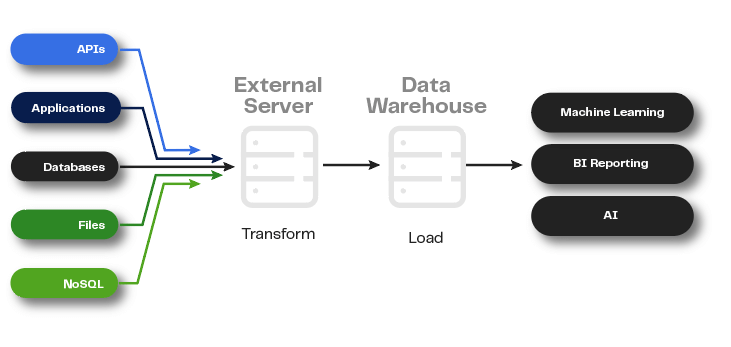
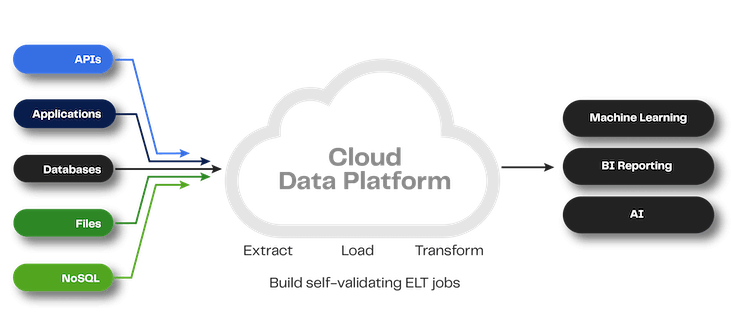
Data extraction is the process of retrieving data from various sources to prepare it for processing and analysis. It serves as the initial step in both ETL (Extract, Transform, Load) and ELT (Extract, Load, Transform) processes, which are necessary for preparing data for meaningful analysis and insights. 

  • ETL: Data is first extracted from its source, transformed into a suitable format, and then loaded into a data warehouse or another destination. 
  • ELT: Data is extracted, loaded into the destination, and then transformed using the power of the cloud or other computing resources.

The primary purpose of data extraction is to make raw data accessible and usable for analytics, business intelligence, and AI/ML applications. Organizations extract data to consolidate information from disparate sources, clean and standardize it, and prepare it for deeper analysis.

This preparation helps generate insights that drive strategic decisions, optimize operations, and improve customer experiences.

Common Sources of Data

Data can be extracted from a wide range of sources, each contributing valuable information to the overall dataset. Here are some of the most common sources:

  • Databases: Structured data stored in relational databases like SQL Server, Oracle, and MySQL.
  • Legacy Systems: Older systems and applications that still hold valuable business data, often requiring specialized extraction methods.
  • SaaS Platforms: Cloud-based software solutions like Salesforce, Google Analytics, and HubSpot, which provide APIs for data extraction.
  • Web Pages: Information scraped from websites, including text, images, and metadata.
  • Social Media: User-generated content from platforms like Twitter, Facebook, and Instagram, offering insights into customer sentiment and trends.
  • Transactional Systems: Systems that handle day-to-day business transactions, such as point-of-sale systems, ERP systems, and ecommerce platforms.

Benefits of Data Extraction

Think of how many pieces of software and applications your business uses. Everything from your customer relationship management (CRM) tool to your email marketing platform (and everything in between) contains valuable data, but it’s all isolated and cut off from each other.

Well, without data extraction, transform, and loading, that is. Here’s why data extraction is so valuable to your business:

Informed Decision-Making

Timely and accurate data extraction helps your business make data-driven decisions with confidence. Extracting data from various sources and consolidating it into a single repository gives you a holistic view of your operations and market trends. 

For example, marketing teams can use extracted data to analyze customer behavior, preferences, and feedback to help them craft targeted marketing strategies that drive engagement and sales. Similarly, customer insights derived from data extraction can inform product development, customer service improvements, and strategic planning.

Improved Operational Efficiency

Automating data extraction reduces the manual effort required to gather and process data. This automation minimizes errors associated with manual data entry and speeds up the entire data preparation process. This automation streamlines workflows, increases productivity, and frees up IT staff to focus on higher-value tasks—such as developing innovative solutions and optimizing systems.

Better Data Quality 

Consolidating your data with extraction tools gives you a single source of truth that you can trust. Plus, it’s timely, accurate, and consistent, helping you maintain the integrity of your data for the long run. 

Scalability 

Your business’s needs will continue to grow and develop. Scalable data extraction solutions help keep all your different data sources in line and connected. This scalability is essential in today's data-driven world, where the volume, velocity, and variety of data keep increasing.

How Data Extraction Works

Here’s a step-by-step look at how data extraction works:

1. Identify Data Changes

The first step in the data extraction process is identifying any changes in your data sources. This can involve detecting new tables, columns, or records that have been added, modified, or deleted. Change detection keeps your extracted data always up-to-date and accurate. 

Various methods can be used to identify these changes:

  • Monitoring database logs
  • Using timestamps to track modifications
  • Employing change data capture (CDC) technologies
2. Choose Data for Extraction

Once changes have been identified, the next step is selecting the specific data to be extracted. This selection process can range from extracting entire datasets to selecting specific subsets of data based on criteria such as date ranges, data types, or specific attributes. The choice between full extraction and selective extraction depends on the data requirements and the goals of the extraction process. 

For example, a full extraction might be necessary for initial data migration, while incremental extraction might be more appropriate for ongoing data synchronization.

3. Start Extraction

This involves connecting to the data sources, retrieving the selected data, and transferring it to a staging area or directly into a data warehouse. You can execute the extraction process manually or through automated scripts and tools designed to handle data extraction efficiently.

Extraction Methods

There’s no one-size-fits-all approach to extraction. Some methods will work better for different use cases and businesses, while others will be essential for maintaining accurate and timely data. Here are a few of your options:

Setting and Responding to Notifications

Many data sources (such as databases and SaaS platforms) offer built-in mechanisms to notify systems when data changes occur. These notifications can be configured to trigger data extraction processes automatically. 

For example, you can use webhooks to send an alert when a new record is added to a database or when an existing record is updated.

Performing Incremental Extraction

Incremental extraction is a method used to extract only the data that has changed since the last extraction. This technique minimizes the system load and reduces the amount of data that needs to be processed. 

You can perform incremental extraction by using change tables, checking timestamps, or leveraging built-in CDC functionalities. While this method is more efficient, it might not always detect deleted records—so it could require additional manual intervention to maintain your data quality.

Performing Full Extraction

Full extraction involves extracting the entire dataset from the source system. This method is typically used during the initial data migration or when the source system doesn’t support incremental extraction. 

While full extraction captures all the data, it can place a massive load on the system and demand substantial processing power. That’s why it’s best to schedule full extraction during off-peak hours to minimize its impact on system performance.

Types of Data Extraction

Data comes in many forms, and each type requires different methods and tools for extraction. In the broadest terms, organizations extract three types of data:

  • Unstructured data
  • Structured data
  • Semi-structured data
Unstructured Data

Unstructured data refers to information that isn’t organized in a predefined manner or doesn’t follow a specific format. Examples of unstructured data include emails, audio files, social media posts, images, videos, and data generated by IoT devices. Extracting unstructured data introduces a handful of challenges due to its diverse formats and the lack of a consistent structure.

Challenges and Preprocessing Steps

  1. Data Cleaning: Unstructured data often contains noise, such as irrelevant information, duplicate entries, and inconsistencies. Cleaning involves removing these unwanted elements to keep the data accurate and reliable.
  2. Data Transformation: This step might involve techniques like natural language processing (NLP) for text data, speech-to-text conversion for audio files, and image recognition for visual data.
  3. Handling Missing Values: Unstructured data often has missing or incomplete values. You’ll need to develop strategies to handle these gaps, such as imputation or discarding incomplete records.
  4. Data Integration: Combining unstructured data from various sources requires careful integration to maintain data consistency and coherence.
Structured Data

Structured data is organized and easily searchable in fixed fields within a record or file. Examples of structured data include SQL database tables, spreadsheets, and formatted XML files. The extraction process for structured data is generally more straightforward.

Extraction Process Within Structured Data Systems

  1. Direct Queries: Structured data can be extracted using direct queries in languages like SQL. These queries can retrieve specific data subsets based on defined criteria.
  2. API Access: Many structured data systems provide APIs that allow programmatic access to the data. This method is efficient for automated extraction processes.
  3. Export Tools: Many database management systems offer built-in tools to export data in various formats such as CSV. These tools facilitate easy data extraction and transfer.
Semi-Structured Data

Semi-structured data falls between structured and unstructured data, possessing some organizational properties but lacking a completely rigid structure. Examples of semi-structured data include JSON files, XML documents, HTML content, and NoSQL databases. Despite having a semblance of organization, extracting semi-structured data introduces unique challenges because it does not adhere to the same level of rigid schema as structured data.

Extraction and Preprocessing of Structured Data

  1. Data Parsing: Semi-structured data often comes with tags, markers, or other forms of delineation. Parsing involves identifying and extracting these elements to make the data more usable.
  2. Schema Detection: Semi-structured data may not consistently follow a predefined schema. Automatic or semi-automatic identification of the schema helps in understanding the data structure and ensures that the extracted data is accurately interpreted.
  3. Validation: This step ensures that the extracted data adheres to expected patterns and formats. Validation checks help maintain the reliability and usability of the data.
  4. Data Normalization: This step organizes semi-structured data into a more consistent format. Techniques may include flattening nested structures or converting to a tabular form, aiding downstream processing.

Common Data Categories

Companies extract a vast range of different data (both structured and unstructured) to meet their business needs. However, these typically fall within just three types of categories: operational data, customer data, and financial data.

Operational Data

Operational data relates to the day-to-day activities and processes within an organization. Extracting operational data can help improve efficiency and outcomes by providing insights into workflow performance, process bottlenecks, and resource utilization.

Examples:
  • Inventory levels
  • Production schedules
  • Supply chain logistics
Customer Data

Customer data includes information about customers, such as their contact details, purchase history, preferences, and feedback. Extracting customer data lets you personalize marketing, create targeted advertising, and improve customer service.

Examples:

  • Customer names and contact information
  • Purchase histories
  • Customer feedback and reviews
Financial Data

Financial data encompasses metrics related to the financial performance of your organization. Extracting financial data helps you track performance, conduct strategic planning, and make informed financial decisions.

Examples:

  • Sales numbers
  • Purchasing costs
  • Competitor pricing
  • Profit and loss statements

Data Extraction Tools

Data extraction tools come in a few shapes and sizes, and not every solution will be the right fit for your organization. Here are a few different categories of data extraction tools: batch processing tools, open source tools, and cloud-based tools.

Batch Processing Tools

Batch processing tools extract large volumes of data in consolidated jobs that are often scheduled during off-hours to minimize system load. These tools are ideal for scenarios where data doesn’t need to be immediately available and can be processed in bulk.

Open Source Tools

Open source data extraction tools are a popular choice for organizations with limited budgets and strong IT capabilities. These tools offer flexibility and community support, but they require a certain level of expertise to implement and maintain.

Cloud-Based Tools

Cloud-based data extraction tools represent the latest generation of data management solutions, offering automation, scalability, and security. These tools are typically part of a larger cloud ETL solution and provide seamless integration with data warehousing and analytics platforms.

Best Practices for Data Extraction

The integrity of your data starts with your data extraction process. Following a few tips and best practices will help you maintain data quality and consistency while avoiding common pitfalls:

  1. Validate Data at Source: Before extraction, validate the data to guarantee it meets quality standards. This helps minimize errors and inconsistencies.
  2. Clean Data Regularly: Implement regular data cleaning routines to remove duplicates, correct errors, and handle missing values.
  3. Use Automation Tools: Leverage automation tools to schedule and perform data extraction tasks.
  4. Implement Notifications: Set up notifications to alert you of any issues or changes in the data extraction process.
  5. Scheduled Maintenance: Perform scheduled maintenance on your data extraction tools and systems to keep them running smoothly.
  6. Encrypt Sensitive Data: Encrypt sensitive data during extraction to protect it from unauthorized access and breaches.
  7. Access Controls: Implement strict access controls to limit who can initiate and manage data extraction processes.
  8. Incremental Extraction: Use incremental extraction methods to minimize system load and improve performance. This involves extracting only the data that has changed since the last extraction.
  9. Efficient Query Design: Design efficient queries to extract data. Avoid complex queries that can slow down the extraction process and impact system performance.
  10. Scalable Tools: Choose data extraction tools that can scale with your data needs. This guarantees your processes can handle increasing data volumes without performance degradation.
  11. Future-Proofing: Consider future data growth and integration needs when designing your data extraction processes. This helps in avoiding costly overhauls down the line.
  12. Process Documentation: Maintain detailed documentation of your data extraction processes, including workflows, tools used, and any custom configurations.
  13. Initial Testing: Conduct thorough testing of your data extraction processes before deploying them in a live environment.
  14. Regular Audits: Perform regular audits of your data extraction processes to double-check that they continue to meet your requirements.

Real-world examples of Data Extraction

Various industries use data extraction to gather insights, make better decisions, and streamline operations. Here are a few real-world examples of different sectors using data extraction:

E-commerce and Retail

E-commerce companies extract data from online transactions, web analytics, and social media interactions to understand customer behavior, and retailers use data extraction to monitor inventory levels in real time by pulling data from point-of-sale systems and supplier databases.

Healthcare

Healthcare providers extract data from electronic health records (EHRs), patient management systems, and wearable devices to create comprehensive patient profiles. This data is used to improve patient care, track treatment outcomes, and conduct medical research.

Wearable devices and health apps continuously extract data on vital signs such as heart rate, blood pressure, and activity levels. This information is used to provide real-time health monitoring and send alerts for any anomalies detected.

Finance

Financial institutions extract transaction data to detect fraudulent activities. Banks can analyze patterns and anomalies in transaction data to identify and prevent fraudulent transactions in real-time. And investment firms extract data from financial markets, news sources, and economic indicators to assess risks and make informed investment decisions. This helps in minimizing losses and maximizing returns.

Manufacturing

Manufacturing companies extract data from IoT sensors embedded in machinery to monitor equipment health. They analyze this data to proactively predict when maintenance is needed and prevent costly downtime. Plus, data extraction from suppliers, production lines, and logistics systems helps manufacturers optimize their supply chain operations.

Education

Educational institutions extract data from student management systems, online learning platforms, and assessment tools to analyze student performance. This helps in identifying areas where students need support and improving educational outcomes.

Get Started with Data Extraction with Matillion

Data extraction is the fundamental start to harnessing the power of your data, and we can help. Matillion provides powerful data integration tools that make it easier than ever to extract, transform, and load cloud-based data:

  • User-Friendly Interface: Matillion's intuitive drag-and-drop interface allows users of all technical skill levels to create and manage data workflows.
  • Scalable Solutions: Designed for cloud environments, Matillion scales with your data needs to handle large volumes of data without disruptions.
  • Comprehensive Integration: Matillion offers a range of pre-built connects (and custom connectors) to seamlessly integrate data from various sources.
  • Advanced Transformation Capabilities: Use SQL and Python for complex data transformations (all within an easy-to-use platform).

Ready to get started? Start your free trial today or book a demo with our team. 

Get started today

Matillion's comprehensive data pipeline platform offers more than point solutions.